 Thu 30 Apr, 2026
 Gbolade Ogunfowote
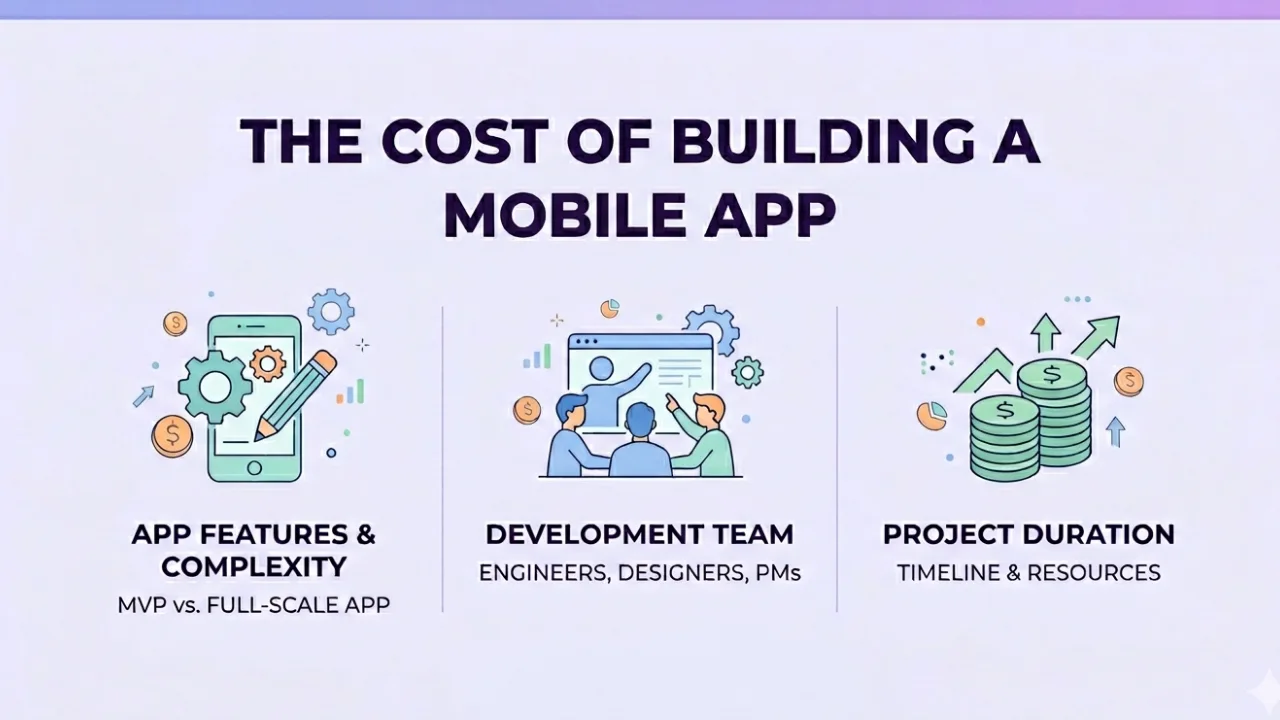
How much does it cost to build a mobile app in 2026?
If you have searched online, you have likely seen very different answers. One says $5,000. Another says $100,000. It can be confusing.
The truth is, there is no fixed price. The cost depends on what you want to build and how you plan to build it.
This guide breaks it down in a clear way. You will see real cost ranges, what affects pricing, and how to plan your budget with more confidence.
What Is the Average Cost of Building a Mobile App?
There is no single price for building a mobile app in 2026. What exists instead is a range, and where a project falls within that range depends on what is being built and how much work goes into it.
To make it clearer, here is a global breakdown based on typical mobile app development cost patterns.
Simple Mobile Apps
$5,000 – $30,000
These apps are usually straightforward in structure.
They often include:
- A few core screens
- Basic user actions like sign up or contact forms
- Limited features without heavy backend work
- Standard design with minimal customization
This type of app is usually built for early ideas or simple business needs where the goal is to get something functional out quickly.
Mid-Level Mobile Apps
$30,000 – $100,000
This is the most common category for business apps.
At this stage, apps often include:
- User accounts and authentication
- Payment systems or subscription setup
- Admin dashboards for management
- More detailed UI design work
- Integration with external tools or APIs
The structure is more layered, and both design and development require more time and coordination.
Complex Mobile Apps
$100,000 – $300,000+
These apps are built for scale and long-term use.
They often include:
- Real-time features like chat or live updates
- Strong security systems, especially for financial data
- Multiple user roles and advanced dashboards
- Large backend systems handling high traffic
- Integration with several third-party services
At this level, development goes beyond building features. It involves system planning, scalability decisions, and long-term maintenance considerations.
A Clear Way to Understand It
Mobile app pricing is shaped by scope.
A small scope means fewer features and a simpler structure, which keeps costs lower. A wider scope means more features, more screens, and more technical layers, which increases the total cost.
So instead of asking for a fixed price, it is more accurate to look at what your app needs to do and how far it needs to go.
This is what determines where your project sits within the mobile app development cost range.
Key Factors That Affect Mobile App Development Cost
Mobile app pricing does not come from a single source. It is shaped by a combination of decisions made during planning, design, and development. Once these factors are clear, it becomes easier to understand why cost can shift significantly from one project to another.
App Complexity and Features
This is one of the strongest cost drivers.
A simple app with a few screens and basic actions requires limited work. Once an app starts to include more features, the workload increases quickly.
For example:
- login and authentication systems
- user profiles and dashboards
- payment systems
- chat or messaging features
- real-time updates
Each added feature is not just a button on the screen. It requires planning, backend setup, testing, and ongoing maintenance. The more features included, the more development time is needed, which increases overall cost.
Platform Choice
The platform your app is built for also affects pricing.
A single platform app is built for either iOS or Android. This reduces development time and testing effort.
When both platforms are required, development usually takes longer because:
- code needs to be adapted for different systems
- testing must be done across multiple devices
- design adjustments may be needed for consistency
Cross-platform development can reduce some of this effort, but complexity still increases as the app grows.
UI and UX Design
Design is not only about how an app looks. It directly affects how users interact with it.
A basic design uses standard layouts and simple screens. This requires less design time.
A more advanced design includes:
- custom layouts for each screen
- smooth user flow between actions
- brand-specific visuals
- interactive elements that guide user behaviour
The more detailed the design, the more time is needed to plan and implement it properly.
Backend and Infrastructure
The backend is what runs the app behind the scenes.
It handles things like:
- storing user data
- processing requests
- managing authentication
- connecting different parts of the app
Simple apps may need a lightweight backend. Larger apps require more structured systems, sometimes with cloud services, databases, and APIs working together. This level of setup increases both cost and development time.
Third-Party Integrations
Many apps rely on external services to function properly.
Common integrations include:
- payment gateways like Stripe or PayPal
- mapping services
- email and SMS systems
- analytics tools
- social login systems
Each integration requires setup, testing, and maintenance. Some also come with usage costs over time, which adds to the overall budget.
Team Structure and Experience
Who builds the app also influences cost.
Different team setups include:
- freelance developers
- small studios
- full-service agencies
- distributed global teams
More experienced teams often charge higher rates because they bring structure, faster execution, and fewer errors. Less experienced teams may charge less, but projects may take longer or require more revisions.
Hidden Costs You Should Plan For
When people think about the cost of mobile app development, the focus is usually on design and development. That is only part of the picture. There are additional costs that often arise later in the process, and they can affect your total budget if they are not planned for early.
Maintenance and Updates
After an app is launched, work does not stop.
Apps need regular updates to:
- fix bugs that appear after release
- improve performance over time
- adjust to new operating system changes
- add small improvements based on user feedback
Most apps continue to evolve after launch, so maintenance becomes a recurring cost, not a one-time expense.
Hosting and Infrastructure
Every mobile app needs a place where its data lives.
This includes:
- cloud servers
- databases
- file storage systems
- bandwidth usage
As more users start using the app, these costs can increase because the system needs more capacity to handle traffic and data.
Third-Party Tools and Services
Many apps rely on external services to function properly.
These may include:
- payment systems
- SMS or email services
- analytics tools
- map and location services
Some of these tools charge based on usage, which means costs grow as the app scales.
App Store Fees
Publishing an app on platforms like Google Play or Apple App Store comes with standard fees.
There are also ongoing costs tied to:
- developer accounts
- app listings
- updates and submissions
These are often small compared to development costs but still part of the overall budget.
Ongoing Feature Improvements
After users start interacting with the app, new needs often come up.
This can include:
- adding new features
- improving existing screens
- refining user experience based on feedback
These updates are not always planned at the beginning, but they often become necessary as the product grows.
How Long Does It Take to Build a Mobile App?
The time required to build a mobile app depends on how simple or complex the product is. It also depends on how clear the requirements are before development begins.
Below is a realistic timeline based on common project types.
Simple Apps
2-3 months
These apps have limited features and a straightforward structure.
Work usually includes:
- basic UI design
- simple backend setup
- core feature development
- testing and deployment
Because there are fewer moving parts, development moves faster.
Mid-Level Apps
3 to 6 months
These are more structured business applications.
They often require:
- detailed UI and UX design
- user accounts and authentication systems
- payment or third-party integrations
- backend development with multiple features
- thorough testing across devices
More coordination is needed, which extends the timeline.
Complex Apps
6 to 9+ months
These apps involve advanced systems and larger scopes.
They usually include:
- real-time features like chat or live updates
- complex backend architecture
- multiple user roles and permissions
- strong security layers
- integration with several external services
Because of the scale, development is done in stages, which increases the overall timeline.
How to Reduce Mobile App Development Costs
One of the smartest ways to reduce cost is to start with an MVP.
A minimum viable product, often called MVP, is a simple version of your app that focuses only on the core problem it is meant to solve. Instead of building every feature at once, you start small, then expand based on real user feedback.
👉 Learn more about this approach here: minimum viable product (MVP)
This method helps to virtually reduce mobile app development costs because it prevents unnecessary work at the beginning stage.
This reduces the risk of spending heavily on features that may not be needed.
Use Cross-Platform Development Where Possible
Building separate apps for iOS and Android increases time and cost.
Cross-platform development allows a single codebase to work on both platforms. This can reduce development effort while still delivering a consistent user experience.
It is often used for:
- MVPs
- early-stage business apps
- apps that do not require deep platform-specific features
Choosing this approach depends on the product goals, but it is a common way to manage budget more efficiently.
Let’s Help You Plan Your Mobile App the Right Way
A mobile app should not start with assumptions. It should start with clarity on what you are building, how it will work, and what it will cost before development begins.
That is where proper planning makes the difference. When the scope is clear, decisions become easier, and the budget becomes more predictable.
If you already have an app idea and want to understand what it will realistically take to build it, the next step is simple.
Get in touch with Mactavis Digital today to plan your mobile app properly, define the right features, and get a clear development direction that matches your goals and budget.